Agile adoption usually fails before the tool is configured.
The ceremonies may exist. The board may exist. The vocabulary may exist, especially if everyone has been through the same training deck. None of that tells you whether teams make the same promises, report progress the same way, or understand who owns the next decision when work stops moving.
That was the useful finding in an organization trying to scale delivery practices. Teams were working differently enough that leadership lacked a trustworthy view across the portfolio. Roles were unclear. The delivery tool was present, but its use varied by team. The tool was recording the confusion with impressive consistency.
The fast answer would have been enforcement. Pick a configuration, standardize the fields, require everyone to use the same process, and call the rollout complete. That can create compliance. It rarely creates delivery discipline.
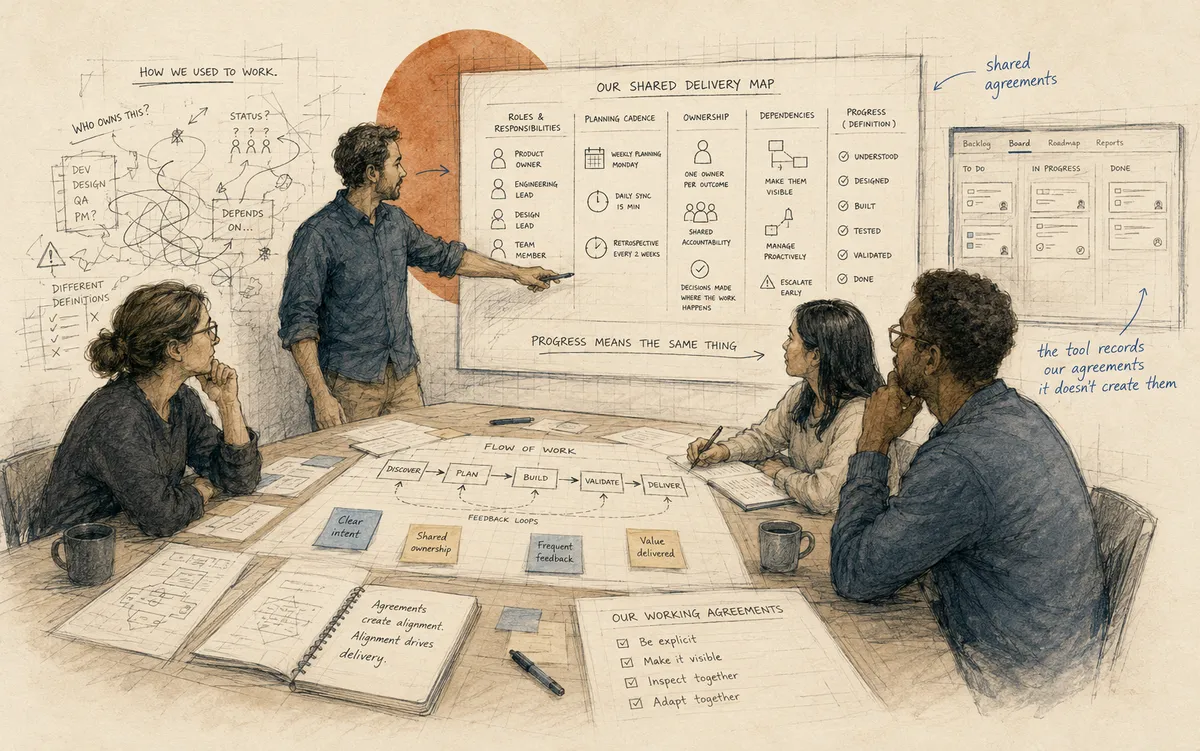
The better work started with readiness and working sessions. Teams needed shared agreements before they needed stricter tooling. Leaders needed to decide what they wanted to see and why. Delivery roles needed clearer boundaries. Planning and reporting practices needed to match the way decisions would be made, rather than the way a template expected them to be made.
Only then did tool configuration become useful. The platform could support consistent planning and reporting because the underlying agreements had been made visible. Without that step, the tool would have become another source of argument. With it, the tool became a record of how the organization intended to work.
This is the part many agile programs underestimate. Standardization can still leave teams speaking different languages. A standard says which field to fill out. Shared language says what the field means when the project is late, the dependency is unresolved, and two teams disagree about priority.
The outcome was clearer ownership and visibility leadership could trust. That matters because scale does not forgive private interpretations. A small team can carry ambiguity in conversation. A portfolio turns that ambiguity into reporting noise, missed dependencies, and meetings where everyone is technically telling the truth.
The tool did not make agile stick. It made the agreements harder to ignore.