Everything written, in one place.
AI-Native Product Development Moves the Bottleneck Upstream
When AI can produce functional code quickly, the limiting work shifts toward specs, product judgment, and the discipline to stop micromanaging syntax.
A Model Nobody Can Use Is a Launch Problem
Frontier AI launches are becoming access stories as much as capability stories. Benchmark claims matter less when policy removes the product.
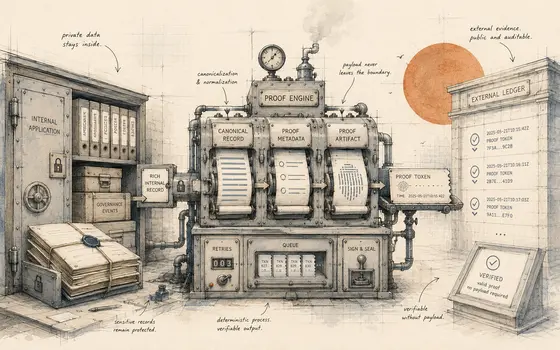
Production AI Needs an Evidence Chain

Production AI governance depends on a reviewable evidence chain around the model, not just a polished recommendation and an approval button.
Why 1 Year of Agentic AI Production Is Already the Bar
One year of agentic AI in production is now a hiring filter, and most people who qualify learned by doing while organizations expected full delivery output and no room to experiment.
Forward Deployed Engineering Is Not Product Engineering on Location
FDE ships in weeks what product teams ship in quarters, but the difference is not speed. It is scope, ownership, and what happens after the work is done.
Forward Deployed Engineering Existed Before the Title Did
Forward Deployed Engineering is a new label for work that's existed for decades. The best technology leaders embedded with operators, stayed through production, and moved between strategy and implementation. AI increased the leverage; the model stayed the same.
AI Can Write the App and Still Fail the Deployment
Code generation is accelerating faster than operational judgment. Secure deployment, access control, and DevOps experience are becoming the bottleneck.
The Token Trap
We stopped measuring engineers by lines of code, then built leaderboards around token usage. The metric changed. The incentive problem didn't. The engineers who will matter are still asking whether the code should exist at all.
AI Can't Staff a Project
Skills and schedules live in systems, but the factors that actually decide who should staff a consulting project—client fit, continuity, trust—usually do not. AI inherits fragmented data; people still route hard staffing calls through the expert who holds the full picture.
AI Infrastructure Is the New Bottleneck
AI progress is no longer constrained only by models. Data centers, permits, power, components, and chip supply now set the pace of deployment.
Broad Models, Narrow Problems
General LLMs and most business workflows are a poor fit. Narrow the problem before you call the model—RAG, fine-tuning, or smaller models—instead of paying in tokens and retries.
You Can Ship Software Without Understanding It
AI-assisted delivery can make a product look finished before the team understands how it fails. Speed helps, but a working demo is not the same as a trustworthy system.
The Model Is Only Part of the Coding Tool
AI coding products compete on workflow as much as intelligence. Visibility, latency, limits, and trust shape whether senior engineers keep using them.
From Punch Cards to AI-Assisted Coding
AI-assisted coding is part of a long arc: tools reduce friction so teams can spend more energy on problem framing, solution design, and real-world outcomes.
AI-First Teams Need Slow Thinking
Crowdsourced engineering already taught a version of the AI lesson: problem framing, review, and trust matter more when execution gets distributed.
A roadmap is not a plan. It's an informed guess with dates.
Roadmaps look precise, but many dates depend on decisions not yet made. Naming what's uncertain keeps them useful instead of fragile.
Agents get the attention. Workflows get the work done.
The industry jumped from prompts to agents and skipped the conversation about AI workflows. Most problems need predictable steps, not open-ended autonomy.
AI Champions Are Usually Already in the Org
Enterprise AI adoption works better when strong operators build from the work outward instead of waiting for a top-down rollout to explain the tool.
The Constraint Didn't Go Away. It Moved.
AI can make coding feel unlimited, but every system still has a bottleneck. Speeding up the wrong step often piles more work in front of the real limit.
What Are We Paying For Now?
As AI compresses delivery time, clients are testing whether consulting fees still map to value. The firms that hold up will make judgment unmistakable, not effort defensible.
AI Adoption Depends on the CTO
The same technology plays out very differently as companies grow: from tool to capability to business lever.
The Basics Are Strategy When Nobody Does Them
Reliability, listening, and follow-through are not flashy. In a market full of friction, they become a serious competitive advantage.
Architecture Is an Organizational Problem
Team structure shapes how systems evolve more than any diagram or tool. If you want to move faster, start with structure before technology.
AI Adoption Needs a Better Scoreboard
License usage and prompt volume reward activity, not judgment. AI change leadership has to measure the work that moved and the trust it preserved.
Decisions That Don’t Stick
Most teams are not slowed down by code. They are slowed by direction that keeps changing and decisions that get reopened.
AI Didn’t Replace Stack Overflow
AI changes how engineers get unstuck, but it does not remove the real work: judging relevance, risk, and fit. Answers got cheaper; responsibility did not.
AI is Making It Easier to Execute, and Harder to Grow
When execution is always smooth, the stretch where judgment forms can quietly disappear. Be deliberate about when to accelerate and when to stay in the problem.
The Gap Between Estimated and Actual Effort is Growing
For engineers, estimated time, actual time, and reported time do not always align. AI anecdotes can widen that gap and distort what the team expects.
We Get a Second Chance with AI
AI is moving faster than most policies and habits. That gives teams another chance to set standards before consequences arrive after the fact.
When Coding Gets Cheaper, Specs Get More Expensive
AI can compress coding time, but ambiguity, integration risk, and production tradeoffs still need ownership before the model starts generating.
Shadow AI Is Adoption Ahead of Governance
Employees are already using AI where policy has not caught up. Waiting for vendors or regulators to define safe use is a slow strategy.
AI Changed Build Versus Buy, but It Did Not End It
AI lowers the cost of building small tools. Enterprise risk, compliance, and maintenance still decide whether custom software is worth owning.
Answers Got Faster. Responsibility Didn't.
AI makes answers cheap. It doesn't make them safe. The work shifts from retrieving information to judging relevance, risk, and fit.
Billing Is a Judgment System
Utilization language is not neutral. It shapes what consultants feel allowed to charge for and what clients believe they are buying.
Pricing Is an Incentive System
Billing models shape behavior. When hours are the scoreboard, decisions start to optimize for billable work, not the right work.
When Knowledge Leaves With the Person
If one person holds the context, the relationship is fragile. The structure should carry the work even when people change.
Beyond the Pilot: Why Day-to-Day Is the Real Test
Pilots are controlled. Real life isn't. The hard part is ownership, support, and how the work holds up once the spotlight moves on.
AI Makes Software Look Done Too Early
Vibe coding can get a feature to the convincing stage quickly. The expensive risk is mistaking convincing for engineered.
Built to Demo, Not to Hold Weight
AI-assisted builds can look nearly finished before the important intent is specified. The risk shows up under load, where missing rules and weak assumptions start to matter.
Ownership Starts After the Code Ships
If you write it, you run it is less a slogan than an accountability model. Architecture decisions are not finished until production has a vote.
Bets Beat Plans When the Work Is Uncertain
Strategy fails when teams cannot connect daily work to the value the company says it wants. Bets make uncertainty visible enough to manage.
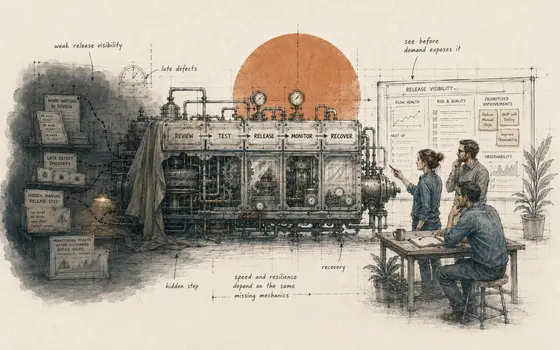
AI Scale Will Break the Thing You Pretended Was Fine
AI does not create every operational weakness. It makes existing weaknesses faster, louder, and harder to explain away.
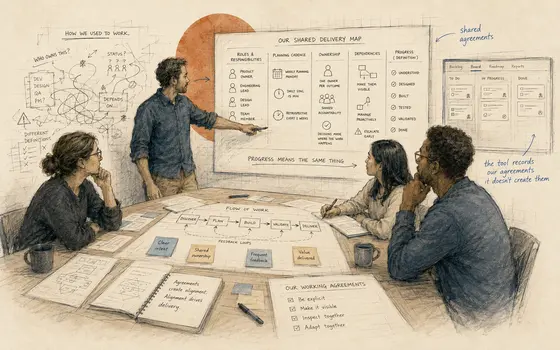
Shared Vocabulary Is Delivery Infrastructure
Words like account, integration, and contract look harmless until different teams build different systems under the same label.
Some Revenue Is Too Expensive
Saying no to paid work feels irrational until the engagement consumes the team, damages judgment, and costs more than the invoice can recover.
Doom Is a Bad Strategy, but a Useful Stress Test
Existential AI arguments can become theater. Used well, they force a more practical question about priorities under uncertainty.
The Middle Is Where Engagements Tell the Truth
Projects are easiest to believe in at the beginning and easiest to rally at the end. The middle shows whether alignment was ever durable.
Consulting Still Runs on Translation
Tools and delivery models have changed, but the durable consulting skill is still translating across departments that think they already agree.
The Next Era of Tech Leadership Is Closer to the Work
Strategy without contact with the work breaks down. Leaders don't need to code full time, but they do need real context.
Failures Leave Better Documentation Than Wins
The career stories that stick are usually the ones where a small decision had a disproportionate cost. That is why they keep teaching.
The Wrapper Is the Product
Many AI tools sit on the same models, but that does not make the product irrelevant. Workflow, latency, and judgment decide whether the tool earns use.
The Right Partner Changes Everything
The best partnerships reduce blind spots and speed up decisions. What I've learned building and delivering side by side.
Explaining Tech to My Mom (and My CEO)
If you can't explain it simply, you probably don't understand it yet. The best leaders make the complex clear without dumbing it down.
Technology Is Not the Value
Clients buy a changed business condition, not a stack. If the team cannot name the outcome, it cannot choose the right technical approach.
Forward Deployed Engineering Is a Response to Distance
The FDE label gets noisy fast, but the useful idea is simple: put technical judgment closer to the customer problem and give it room to act.
How to Spot a Good Tech Consultant
You can usually tell before you sign. Look for curiosity, plain language, and proof they can connect strategy to delivery.
AI Feels Fast Before It Saves Time
Generative AI can make work feel accelerated while shifting effort into prompting, review, cleanup, and mentoring. Speed is not the same as progress.
AI Is Everywhere. But It's Not What You Think
AI can deliver real value in focused spots. But it's still messy, adoption is uneven, and the headlines are ahead of reality.
Trust Starts Before the Work Looks Impressive
The first days of a consulting engagement decide more than most teams admit. Being trustworthy beats trying to be the smartest person in the room.
The Pitch Tells You Less Than the Follow-Through
Great consultants are easier to spot before the contract than most leaders think. Watch how they think, listen, and transfer knowledge.
Bloated Consulting Creates Motion Without Impact
Big consulting teams can make work look serious while separating strategy from execution. Small senior teams win when they stay close to the outcome.
I Started Something New
Teams Are Ensembles, Not Collections of Soloists
A brilliant performer who cannot listen can make the whole group worse. The same thing happens on engineering teams that confuse talent with teamwork.
Where AI Helps and Where It Doesn't
Most AI pilots can demo something. Fewer change outcomes. The difference is a real problem, usable data, and clear guardrails.
Preparation Is Where Adaptability Comes From
Projects rarely fail because the original plan was imperfect. They fail when the team has no way to respond once reality starts editing the plan.
The Solution Is Usually a Symptom
Clients often arrive with the system they think they need. The expensive failure starts when the team accepts that answer before finding the problem.
A Different Way to Build
Part memoir, part field guide. What I learned about building big things without burning out in the process.
Delivery Without Ownership Still Fails
Shipping the software is only part of delivery. If the people who need the outcome are not in the room, technical success can still land as business failure.
Lean Consulting Holds Up Better
Big teams can slow decisions. A small senior team stays closer to the work and moves faster, with fewer handoffs and less waste.