Crowdsourced engineering was better preparation for AI than most of us realized.
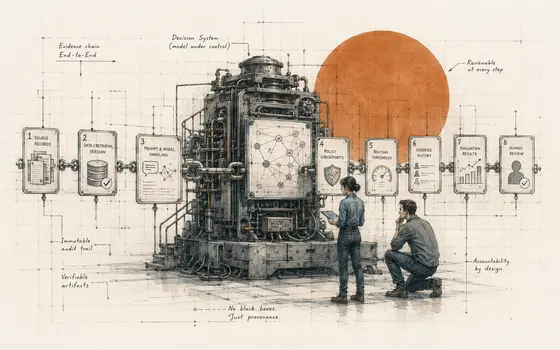
Before agents were writing code, platforms like Topcoder had already forced teams to break work into clear problem statements, define judging criteria, review output from distributed contributors, and decide what trust meant when the person doing the work was outside the usual team structure.
That maps cleanly onto AI-assisted delivery.
The lesson is not that humans and models are the same. The lesson is that execution gets cheaper only when the surrounding system is strong enough to absorb distributed output. Fast work needs slow thinking around it. Kahneman's distinction is useful here: AI can produce the fast, repeatable part, but humans still own deliberation, context, and consequence.
That is why component catalogs, test-aware specs, and clear intent matter. A small AI-augmented team can move quickly when it knows what it is composing and why. A regulated banking infrastructure build can compress dramatically when the boundaries are sharp. Without those boundaries, speed just creates a larger review problem.
Tool choice fits here too. Cursor versus Claude Code is less a moral position than a workflow question. Which one helps the team think, review, and recover under the constraints it has.
AI-first teams do not need less engineering discipline. They need discipline moved earlier, before the fast part starts producing evidence that looks like progress.
Related episode: Making AI-First Engineering Teams Successful, With Andy LaMora.