AI-native product development changes the old MVP bargain.
For years, minimum viable product often meant stripped down, unpolished, and barely enough to test the market. That made sense when functional code was expensive enough that polish had to wait its turn. If AI can generate useful code quickly, the first release can carry more of the intended experience.
The bottleneck moves upstream.
Chris Haas spent the bulk of his time on planning and specs while building skim it. That ratio matters. The product did not get better because the model magically understood YouTube noise, user intent, interface quality, and workflow fit. It got better because the intent was shaped before the code started arriving.
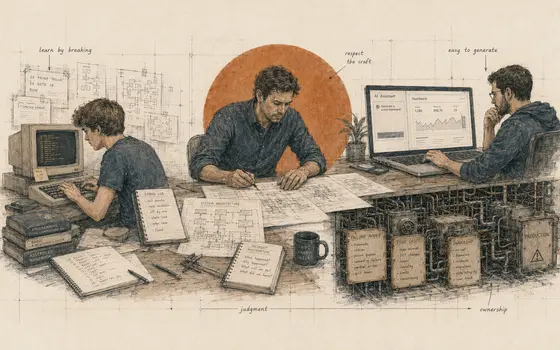
That requires a psychological shift for experienced developers. Letting go of line-by-line control feels wrong when your career has trained you to trust syntax you can inspect. But AI-native work is less about abdicating judgment and more about moving judgment to the right layer: product definition, constraints, review, and taste.
Tools like Claude Design can accelerate UI exploration when the spec is strong enough. They can also generate attractive confusion when the spec is weak. The difference is rarely the model alone.
The first version can be more polished now. That does not make it less designed.
If anything, it makes design harder to hide from.
Related episode: AI-Native Product Development With Chris Haas.