Teams often discover data problems after the moment to act on them has passed.
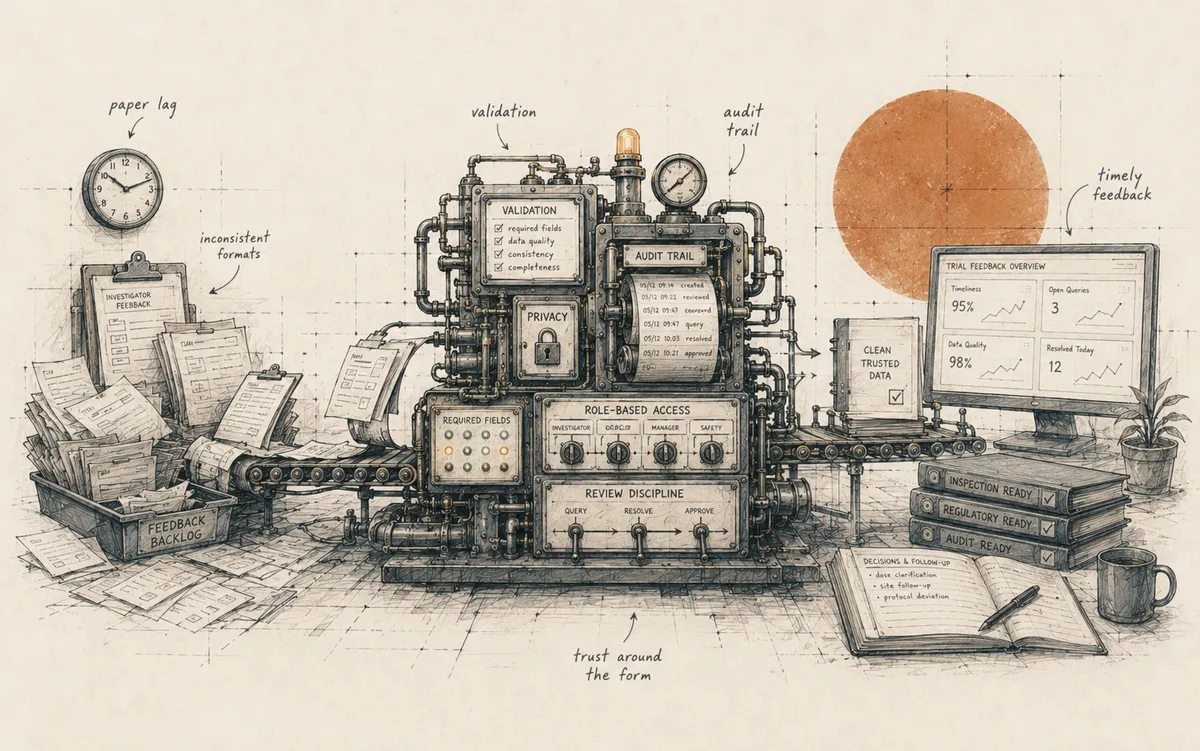
That is the quiet cost of paper feedback. The form gets completed late, entered later, reviewed later, and reconciled after everyone has already moved on to the next operational fire. The organization still has data. It just has data with a long fuse attached.
In a long-running program, participant feedback was arriving inconsistently enough to slow learning and add administrative work. The obvious fix was digitization. The less obvious part was that a weak digital system would have made the problem more official without making it safer.
Regulated workflows do not get simpler because the form moved to a screen. Validation rules need to catch bad inputs before they become cleanup work. Role-based access needs to match how teams operate. Audit trails need to exist before someone asks for them. Privacy cannot be bolted on later because the system has already taught people where to put sensitive information.
That is where many internal tools fail. They copy the paper process into a browser and call the result progress. The team gets faster typing and faster mistakes. Everyone has a login, which is to say everyone has a new place to create evidence that will need explaining.
The better move was to design the collection workflow around trust. Feedback came in closer to the moment it was created. Required fields, validation, access controls, and auditability were part of the first version. Leadership could see the work sooner without asking the delivery team to become a reporting department.
Speed was the visible benefit, especially when the old process created weeks of lag. The larger change was that the team could make decisions from current information instead of reconstructed history.
Paper sometimes feels safer because it is familiar and slow. In regulated work, slow can look like control from a distance. Up close, it often means missing data, duplicated effort, and a trail of exceptions that only makes sense to the person who cleaned it up.
The form was never the system. The system was the trust around the form.