Shared programs break in the gaps between organizations.
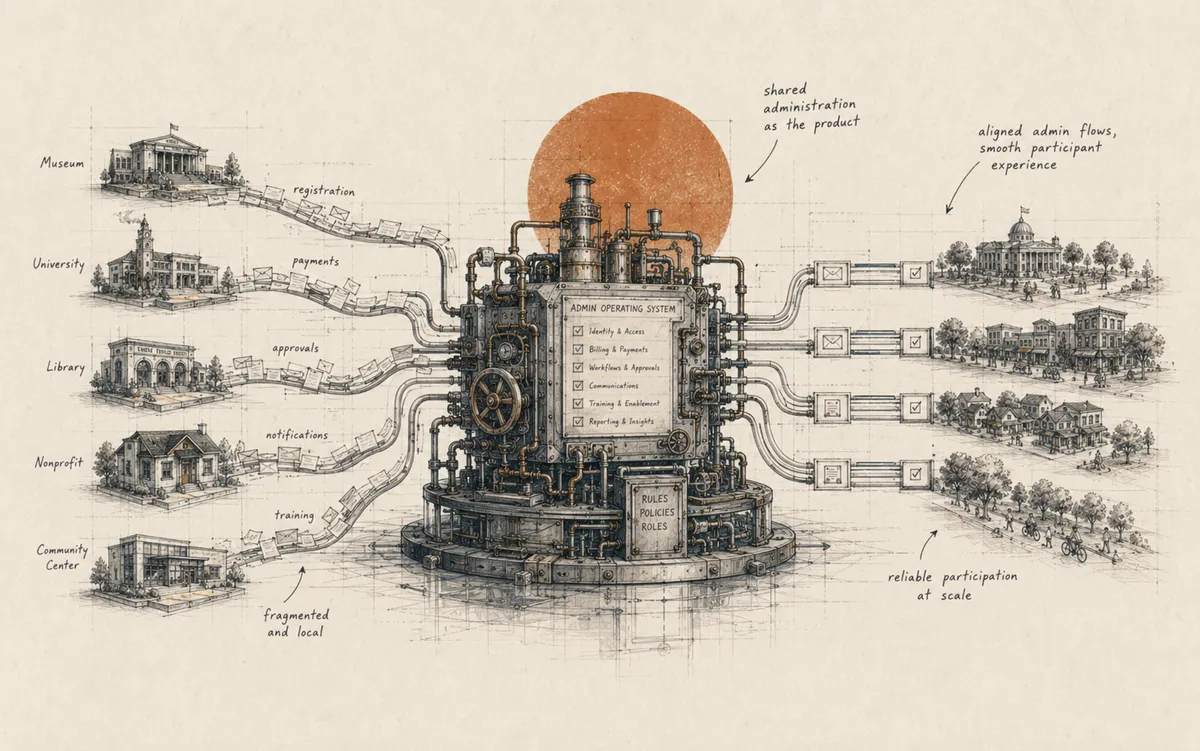
Each member can be competent. Each team can care about the same outcome. The failure still shows up in registration, payments, notifications, approvals, reporting, and the small administrative decisions that nobody wanted to own because nobody owned the whole system.
That is the pattern behind many membership programs. The public goal is participation. The practical constraint is administration. People cannot participate at scale if the machinery behind participation stays fragmented.
This is where platform work gets less glamorous and more useful. The important decisions were not only about screens. They were about who could register, how payments would be handled, what messages went out automatically, which administrators could change records, and how participating groups would learn to operate the system without calling engineering every time a workflow moved.
The technology mattered because the operating model was distributed. A single company can sometimes survive an awkward internal workflow through force of habit. A shared program has fewer informal shortcuts. If the platform does not make the process clear, each member fills the gap locally. Then the shared effort becomes a set of local interpretations with a logo on top.
The useful pivot was treating administration as part of the product. Registration was not clerical residue. Payment handling was not plumbing. Notifications were not decorative. Training was not a handoff after launch. Those details were the product because they determined whether people could participate without requiring a person behind the curtain to rescue the process.
The result was a membership platform that reduced administrative drag and gave the organization a way to grow participation without multiplying coordination work. That sounds less exciting than a public adoption campaign. It is also the part that keeps the campaign from collapsing into spreadsheets.
Large programs depend on policy, capacity, demand, and a dozen other forces outside any single platform. Shared programs still need a place where participation becomes operationally boring.
Boring is underrated. It is often the first sign the platform is finally doing its job.